


What They Cost, Which Type Is Right for Northeast Florida, and What to Check When Yours Stops Working
Every October, the same thing happens to pool owners across Ponte Vedra: the water temperature drops, someone goes to turn the heater on for the first time since spring — and nothing works the way it should.
Sometimes the heater won’t ignite. Sometimes it runs but the pool stays cold. Sometimes the display looks normal but the water temperature never budges. And sometimes the heater hasn’t been thought about in five months, so no one is entirely sure what the settings are supposed to be.
At ASP – America’s Swimming Pool Company of Ponte Vedra, heater calls spike every October throughout Ponte Vedra, Ponte Vedra Beach, Nocatee, Jacksonville Beach, Atlantic Beach, Neptune Beach, and Palm Valley. Most of the time, the issue is something straightforward — not a failed heater. But catching it early means a warm pool through fall and winter. Ignoring it usually means a cold one.
This guide covers everything Ponte Vedra pool owners need to know about heaters: which type makes sense for our climate, what they cost to buy and run, and how to tell whether yours is actually working.
Which Type of Pool Heater Is Right for Northeast Florida?
There are three main pool heater technologies. Each has a different upfront cost, operating cost, and performance profile — and Northeast Florida’s climate tips the scales significantly toward one of them.
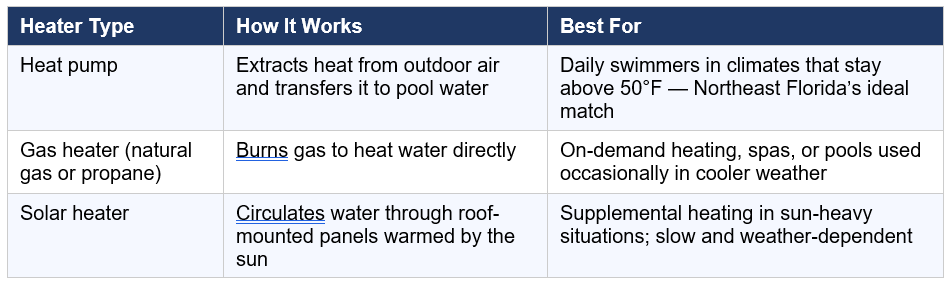
For most Ponte Vedra pools, a heat pump is the right long-term choice.
Northeast Florida temperatures rarely drop below 45–50°F overnight even in winter, which is exactly the range where heat pumps perform at their best. A heat pump moves heat rather than generating it — delivering 4 to 5 units of heat for every unit of electricity consumed. That translates to operating costs roughly 70–80% lower than gas, making it the clear winner for pools used consistently through fall, winter, and spring.
Gas heaters still make sense in two specific situations: pools with a spa that needs rapid temperature recovery (gas can raise water temperature twice as fast as a heat pump), or pools used only occasionally where the goal is to heat quickly on demand rather than maintain a consistent temperature daily.
Solar is a viable supplement but is weather-dependent and too slow for consistent comfort — most Northeast Florida homeowners who go solar add a gas or heat pump backup for the cooler months.
What Does a Pool Heater Cost?
Purchase and Installation
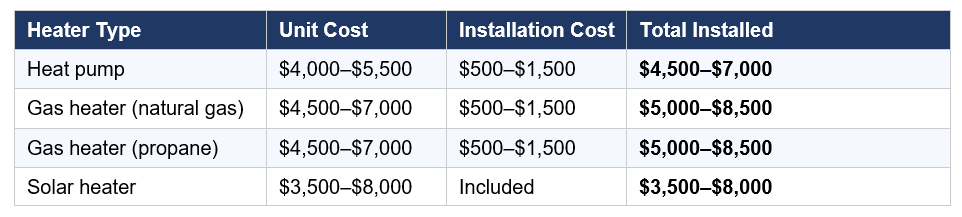
Important: if you do not already have a gas line run to your pool equipment area, adding one typically costs an additional $1,000–$2,500 depending on distance from the meter. This is the most common hidden cost in gas heater quotes.
Monthly Operating Costs
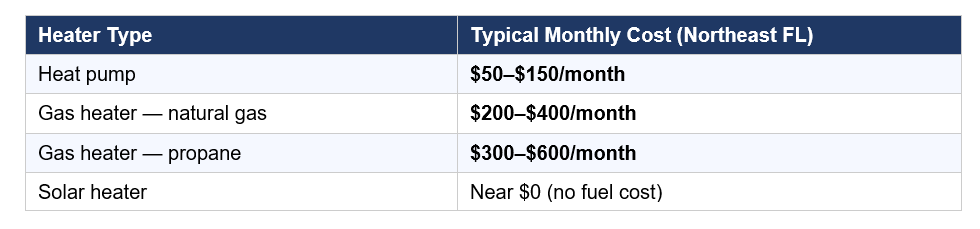
Operating costs vary by pool size, desired temperature, ambient conditions, and usage frequency.
Lifespan
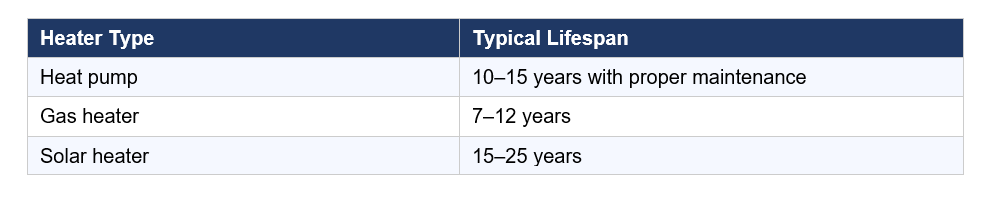
The higher upfront cost of a heat pump is almost always recovered within 2–4 years of operating savings compared to gas — making it the better investment for any pool used more than a few months a year in our climate.
Signs Your Heater May Not Be Working
Fall is when heater problems surface — because heaters often sit unused through the summer and are turned on for the first time as water temperatures drop in October. Here are the most common signs something is wrong, and what’s usually behind them.
Heater Won’t Turn On At All
Before assuming the heater has failed, check these first — in order:
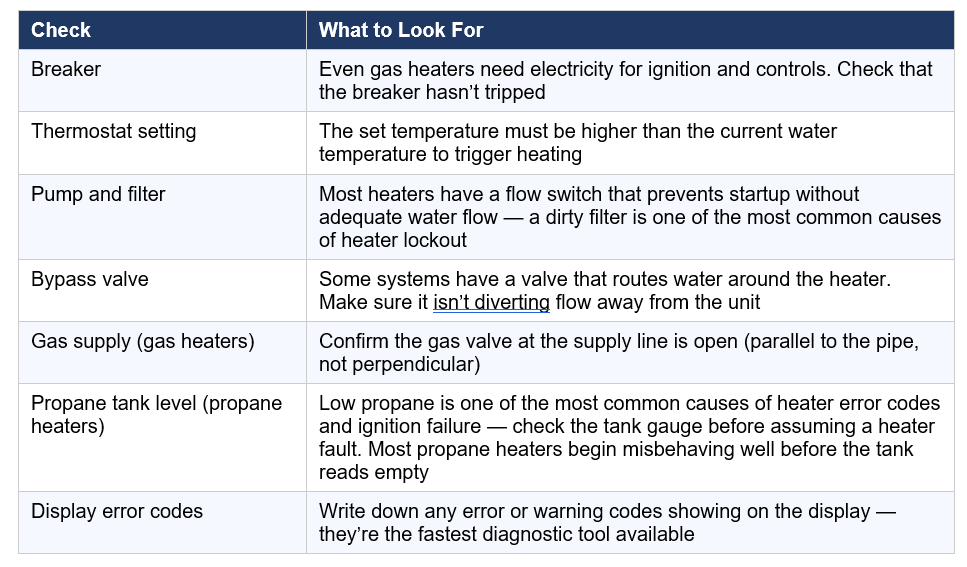
Heater Ignites But Shuts Off Quickly
This is the most common complaint we receive in fall. The heater fires up, runs for a few minutes, then shuts off — and the pool never reaches temperature.
Common causes:
- Low water flow — the most frequent cause. A dirty filter, clogged skimmer basket, or partially closed valve restricts flow enough to trigger the heater’s built-in safety shutoff
- Dirty or corroded igniter — particularly common when a gas heater has sat unused since spring
- Blocked exhaust or intake vents — spiders, wasps, and lizards regularly nest in heater vents during Florida summers. A blocked flue on a gas heater causes it to shut down on safety
- Overheating protection triggering — if water flow is restricted and the heat exchanger overheats, the thermal cutoff switch shuts the unit down
Heater Runs But Pool Stays Cold
The heater appears to be operating — the display is active, there are no error codes, it seems to be running — but the water temperature isn’t rising.
Common causes:
- Thermostat set too close to current water temperature — if the set point is only 2–3 degrees above current temp, the heater runs briefly and cycles off without meaningful heat gain
- Undersized heater — a heater too small for the pool volume can run continuously and still lose the battle against cooler ambient temperatures in October and November
- Heat pump struggling with overnight temps — heat pumps lose efficiency when outdoor air drops below 50°F. If Ponte Vedra nights have been in the mid-40s, a heat pump may run but produce less heat than expected
- Heat loss exceeding heat gain — especially in pools without a cover; overnight evaporation can remove heat faster than the heater replaces it during shoulder season
Heat Pump Running Constantly
A heat pump that runs around the clock without reaching the set temperature is usually one of three things: undersized for the pool, dealing with cold outdoor air temperatures reducing efficiency, or fighting excessive heat loss from an uncovered pool. A pool cover alone can reduce heat loss by up to 70% and dramatically reduce how hard the heater has to work.
Error Codes on the Display
Error codes vary by manufacturer and model. The most common ones we see on Northeast Florida heat pumps in fall:
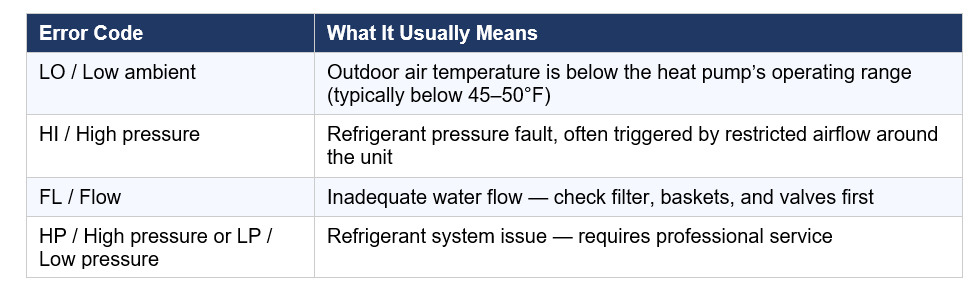
Gas heater codes vary widely by brand. If a code appears and you’re not certain what it means, don’t ignore it — some indicate conditions that can cause damage if the heater continues to run.
The Check That Most Homeowners Skip: The Annual Pre-Season Inspection
Most pool heaters in Ponte Vedra sit completely unused from May through September. Four to five months of Florida heat, humidity, insect activity, and corrosive salt air takes a toll on equipment that isn’t being regularly inspected.
Before turning a heater on for the first time each fall, it’s worth checking:
- Exhaust and intake vents for nests, blockages, or debris
- The heat exchanger for visible corrosion or scale buildup
- All electrical connections for corrosion or loose contacts
- The condition of the igniter on gas heaters
- Water chemistry — scale-forming water (high calcium, high pH) will damage a heat exchanger from the inside over time, even when the heater appears to be working
A quick pre-season check prevents the most common fall heater failures — and is significantly cheaper than diagnosing and repairing a heater that has been run in a degraded condition for weeks.
Our Honest Recommendation
Call for a professional heater inspection or service if:
- The heater won’t ignite or turn on and the basic checks (breaker, thermostat, flow) haven’t resolved it
- The heater runs but shuts off before reaching temperature
- Error codes are appearing on the display
- The heat exchanger shows visible scale buildup or corrosion
- The heater is more than 8–10 years old and performance has noticeably declined
- You haven’t had the heater inspected before a fall season in more than two years
You may be able to resolve this yourself if:
- A dirty filter or clogged basket is the only issue — cleaning these often restores enough flow to allow the heater to operate normally
- The thermostat setting was simply too close to the current water temperature
- A tripped breaker is the sole cause — reset once and monitor
Consider a replacement or new installation if:
- Your heater is more than 10–12 years old, repairs are recurring, and heating performance has steadily declined
- You have a gas heater and are using it daily through fall and winter — the operating cost difference vs. a heat pump is significant over a full season in Northeast Florida
- You don’t currently have a heater and want to extend your swim season through the cooler months — October through March in Ponte Vedra is genuinely comfortable swimming weather with a heater
Pool Heater Installation, Service, and Repair in Ponte Vedra
At ASP – America’s Swimming Pool Company of Ponte Vedra, we provide:
- Heat pump and gas heater installation and replacement
- Heater diagnostics and repair for all major brands (Hayward, Pentair, Jandy, Raypak)
- Pre-season heater inspection and startup service
- Heat exchanger cleaning and descaling
- Full equipment pad service, including pump, filter, and automation integration
- Weekly pool maintenance and preventative care
We proudly serve: Ponte Vedra • Ponte Vedra Beach • Nocatee • Jacksonville Beach • Atlantic Beach • Neptune Beach • Palm Valley • Sawgrass and surrounding Northeast Florida communities
Schedule Your Heater Inspection or Installation Today
Whether you’re turning a heater on for the first time this fall and something isn’t right, or you’re ready to add a heater before the water gets too cold to enjoy, we’re here to help.
We’ll diagnose what’s happening with your current equipment, recommend the right solution for your pool and budget, and make sure you’re heating efficiently before the real chill arrives.
Call ASP – America’s Swimming Pool Company of Ponte Vedra
(904) 300-2379 or request service online.
Because pool ownership should be the fun part—we’ll handle the rest.