


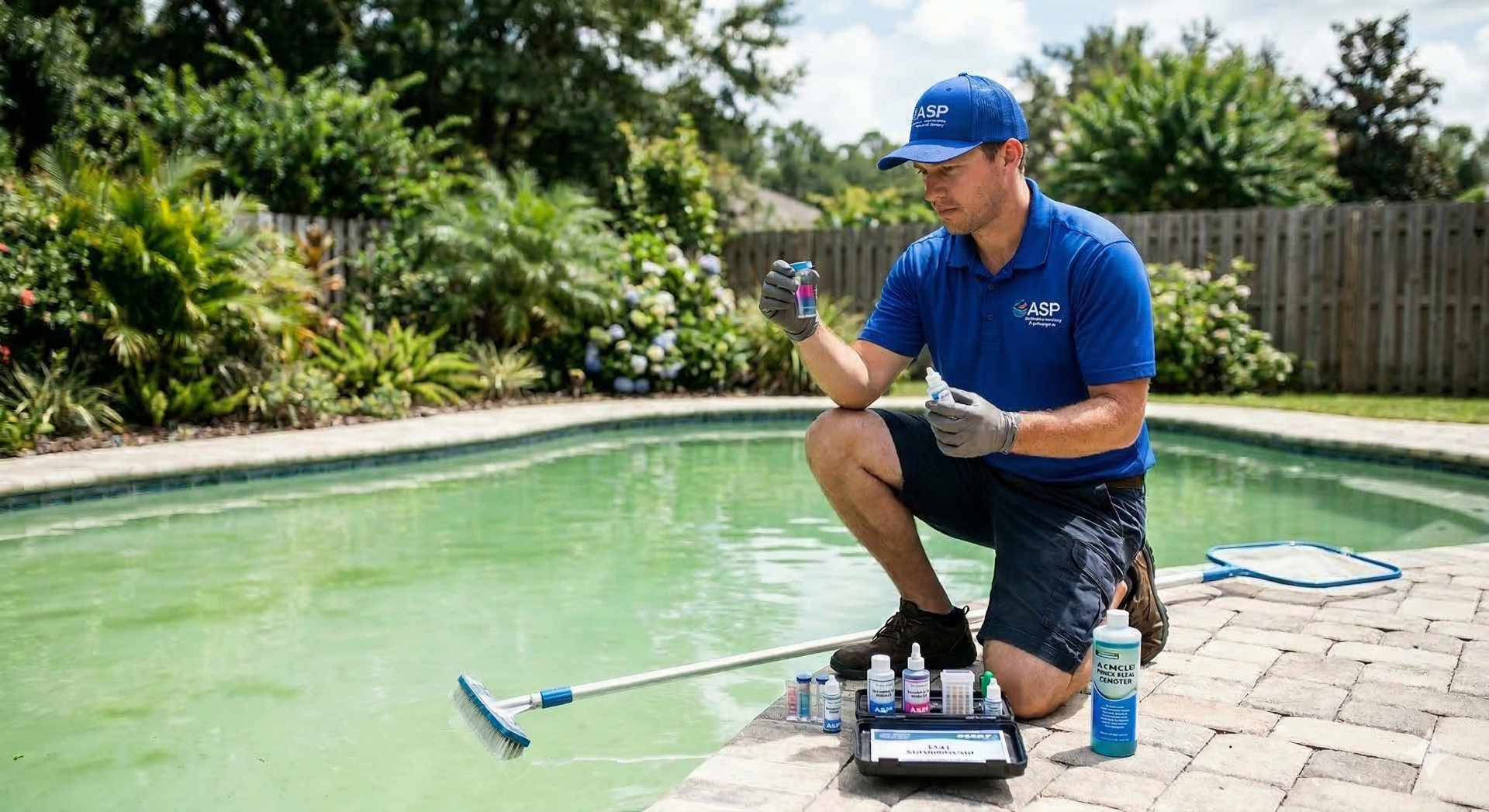
Here along the Gulf Coast, spring comes early — and so does swimming season. By the time March arrives, water temperatures are already climbing in Panama City Beach, Lynn Haven, Panama City, and along Scenic Highway 30A, and pool owners from Bay County to Walton County are firing up their equipment and getting ready for another season on the water.
But before you dive in, there's one invisible problem worth understanding — and addressing now, before it costs you a full summer of cloudy, chemical-hungry water.
Phosphates.
What Are Phosphates — and Why Do They Matter So Much on the Florida Gulf Coast?
Phosphates are organic compounds that enter your pool from everywhere: wind-blown debris, lawn fertilizers, rainwater, organic matter, and even some pool chemicals. By themselves, they're odorless, colorless, and don't immediately cause visible problems. That's exactly what makes them dangerous.
Here's the issue: phosphates are the primary food source for algae. When algae have access to phosphates and warm water — which describes nearly every pool in Panama City Beach, Lynn Haven, Panama City, and along 30A from roughly April through October — they grow aggressively. And when algae are actively growing, they consume free chlorine at an accelerated rate.
The result? Your chlorine is constantly playing catch-up. Your pool is harder to keep clear. You spend more on chemicals. And even with regular treatment, the water never quite looks the way it should.
For Gulf Coast pool owners, this is a recurring seasonal challenge — and phosphate control is the most effective way to break the cycle.
The Gulf Coast Climate Makes This a Bigger Problem Than Most Places
Pool owners in Panama City Beach, Lynn Haven, Panama City, and the 30A corridor deal with one of the most aggressive pool maintenance climates in the country. Extended sun exposure, high humidity, warm air temperatures, and a long swimming season — stretching from early spring well into fall — create near-perfect conditions for algae all year long.
Add in the coastal environment: salt air, frequent rain events, and heavy landscaping activity along the Emerald Coast all contribute to elevated phosphate levels in pool water. Pools along 30A and in the beachside communities of Panama City Beach face particular pressure from organic debris and the unique microclimate of a coastal setting.
The pools that stay crystal clear from spring through Labor Day — whether they're in a Lynn Haven neighborhood, a vacation rental on 30A, or a backyard in Panama City — aren't lucky. They're managed proactively, and phosphate control is a big part of why.
Why Acting in Spring Makes All the Difference
The optimal time to address phosphates is before water temperatures fully climb and before algae have established a foothold. For Bay County and Walton County pool owners, that window is right now — March and April.
Removing phosphates early in the season means your chlorine can do its actual job: sanitizing the water and keeping your family safe. It also means you'll use less chemical overall, your water will stay clearer with less effort, and you won't be scrambling to treat a green pool on the first hot weekend of May.
At America's Swimming Pool Company of Panama City Beach, phosphate testing and treatment is a standard part of how we care for every pool on our weekly maintenance route — in Panama City Beach, Lynn Haven, Panama City, and along 30A. Our CPO-certified technicians test phosphate levels regularly and apply professional-grade phosphate remover when levels are elevated, keeping your free chlorine working efficiently and your water ready to enjoy.
We also believe in transparency: every service visit is documented with photos and notes, so you always know exactly what was done and why.
Your Options as a Gulf Coast Pool Owner
Option 1: Let ASP handle it — serving Panama City Beach, Lynn Haven, Panama City & 30A.
If you're on one of our weekly pool maintenance plans, you're already covered. We monitor and treat phosphate levels as a routine part of spring and summer service. If you're not on a plan yet, spring is the ideal time to get started.
We serve residential and vacation rental pool owners throughout Panama City Beach, Lynn Haven, Panama City, and the 30A / Scenic 30A corridor including communities in South Walton County. Contact us today for a maintenance quote and get ahead of algae season before it arrives.
Option 2: DIY phosphate management.
Prefer to handle it yourself? You can find phosphate test kits and phosphate remover products at most local pool supply or water testing retail stores in the Panama City area. Test your water, follow the product instructions, and run your filter continuously for 24–48 hours after treatment. We'd recommend testing at least once a month through the swimming season — more frequently if you're seeing any cloudiness, if you have heavy bather load (vacation rental owners, this especially means you), or after significant rain events.
Start the Season Right on the Emerald Coast
Phosphate control isn't glamorous pool chemistry — but it's one of the highest-impact, lowest-cost things you can do to protect your water quality all season long. Whether you own a primary residence in Lynn Haven, a vacation rental in Panama City Beach, or a property along 30A, getting your phosphate levels in check this spring sets you up for a clear, low-maintenance pool from now through the fall.
America's Swimming Pool Company of Panama City Beach is here to make that easy for pool owners throughout Panama City Beach, Lynn Haven, Panama City, and 30A. Reach out anytime — we'd love to help you start the season right.