


Most Plano and Dallas homeowners who call us about a pool aren't deciding whether to build one. They already have one — usually built sometime between 1965 and 2005, depending on the neighborhood — and they're deciding what to do about the fact that it looks like it.
So this isn't really a remodel-versus-rebuild article. Rebuilding is on the table for a small number of pools, and I'll give you the numbers for it at the end so you can see the comparison. But for the large majority of pools across Plano and Dallas, the real question is what a renovation will and won't fix, what it costs, and where the traps are.
Why Plano and Dallas are renovation markets
Plano grew fast in the 1980s and 1990s, and a lot of that housing stock came with a pool. Those pools are now thirty to forty years old. The shells are frequently fine. The finishes are not. Neither is the equipment, and neither is the deck.
Dallas adds a second layer to that. The older neighborhoods closer in — Lakewood, the Park Cities, Preston Hollow, parts of East Dallas — carry pools from the 1950s and 1960s, sometimes with finishes and equipment that have been replaced once already and sometimes with plumbing that hasn't. Far North Dallas and the Plano border subdivisions sit mostly in the 1970s through 1990s range. So the scope of a renovation varies more in Dallas than it does in Plano, and the inspection before the quote matters more.
That's all good news, though. A gunite shell is a fifty-year asset with a fifteen-year finish on it. If the structure is sound, you're not replacing a pool — you're replacing the parts that wear out, which is maintenance on a large scale rather than construction from scratch. The difference in cost between those two things is enormous.
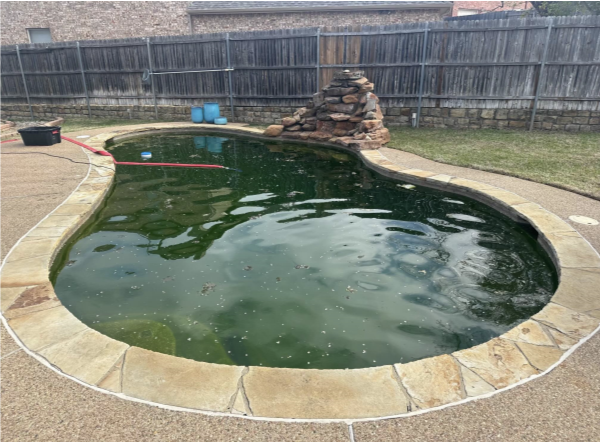
Plano pool with dated 1990s plaster and waterline tile before renovation
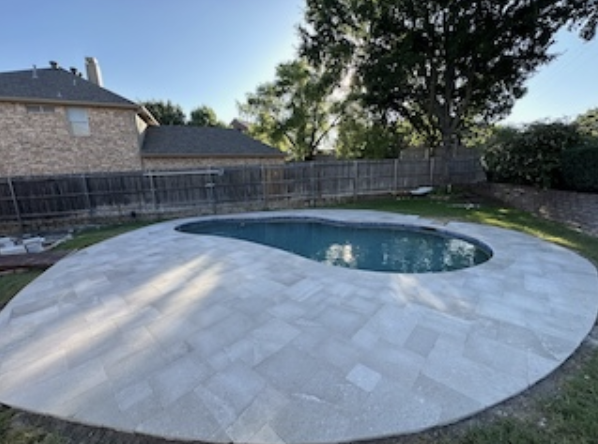
The same Plano pool after resurfacing with new pebble finish, tile and coping
The three renovation scopes, and what each costs (350 sq ft pool)
"Renovation" covers everything from a new interior to a near-total rebuild of the pool area. Knowing which one you're actually buying is the difference between a $12,000 project and a $45,000 one — and the same three scopes apply whether the pool is in Plano or fifteen miles south in Dallas.

Two line items do most of the work in that spread. Decking is priced by area and is the single biggest swing item — entry-level pavers sit close to concrete in price, but stamped concrete and upgraded pavers run roughly $30 to $80 per square foot, and a pool deck is typically 800 to 1,200 square feet. Equipment is the other: a pool still running its original pump, filter and heater needs $6,000 to $15,000 of replacement, which can move a project from the middle band to the top of it.
The pros of renovating
You keep a shell that's already paid for. This is the whole argument. The most expensive part of any pool is the structure, and you already own it.
The cost is a fraction of building. A full renovation at $40,000 is roughly a third of a mid-range new build — and you don't pay to demolish and haul away the old pool, which typically adds $15,000 to $125,000 to a rebuild that people forget to budget for.
The disruption is weeks, not months. A resurface is two to three weeks. A full renovation is five to eight. A new build is four months of excavation, crews and a yard you can't use. If your life doesn't have room for a construction site, this matters more than the money.
You can do it in phases. Finish and tile this winter, deck and equipment next winter. Renovation is divisible in a way that construction isn't, which lets you spread the cost across two budget years. On the older Dallas pools this is often how it actually gets done — the shell and finish first, the equipment and deck a season later.
It converts a pool you avoid into one you use. This is the outcome people actually care about and rarely say out loud. A pool that looks dated and has a failing heater doesn't get swum in. A renovated one does.
Timing works in your favor right now. Renovation demand drops in winter here, which means better scheduling, more attention, and softer pricing than the spring rush. A pool renovated in December is balanced and ready before the first warm weekend.
The cons of renovating — honestly
You inherit whatever's underneath. Nobody knows what the shell looks like until the old finish comes off. Delaminated plaster, spalling gunite, rusted rebar at the waterline, or a previous repair done badly can turn a resurface into a structural job mid-project. This is why a fixed price quoted before the pool is drained is either lucky or planning to renegotiate.
A renovation can't fix a layout problem. Wrong size, wrong end of the yard, wrong shape, wrong depth — none of that is addressable with new plaster. If the pool fights how you use the space, you're renovating the wrong pool.
Old plumbing stays old. If the lines are original and have been repaired more than once, they will keep failing, and each failure means cutting into a deck you just paid for.
You're still living with 1990s geometry. A renovation modernizes materials and equipment. It doesn't add a tanning ledge that wasn't there, or move a skimmer, without structural work that changes the cost class entirely.
Permitting is stricter in Dallas than in Plano. Dallas wants a fuller packet before anything moves, and its plot plan checklist is the most exacting in the Metroplex — including a description of the alarm on any door or gate opening into the pool area. Plano is workable but wants a proper barrier plan. Neither is a reason to avoid a renovation; both are reasons the contractor should be pulling the permit, not you.
There's a ceiling on what it returns. A renovated pool doesn't add value the way a new pool does. It restores value the pool was already supposed to have. Renovate because you'll use it, not because you're manufacturing equity.
Buying a house with an old pool — in Plano or Dallas — and making it yours
This is the scenario we see more than any other in Plano, and it's a genuinely good one if you go in with your eyes open.
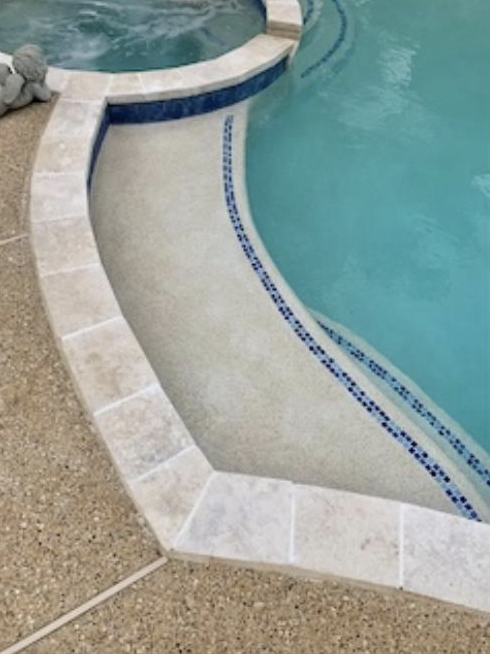
Older Dallas pool with original 1970s finish before renovation
Plenty of buyers across both cities walk away
from houses with dated pools, which is exactly why those houses can be the best value on the street. The pool looks like a liability in the listing photos. It usually isn't — it's a $25,000 to $55,000 line item, and you get to choose the finish, the tile, the deck and the equipment rather than living with someone else's 1998 taste.
You end up with a pool that looks and feels new, in a house you chose, for meaningfully less than the same house with a new pool already in it. That's a good trade — and it works the same way in a 1960s Preston Hollow ranch as it does in a 1990s Plano subdivision, just with a different starting point.
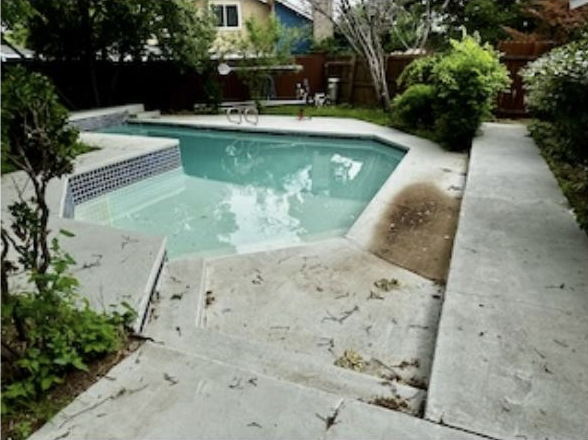
Dallas pool after renovation with new finish, tile and paver deck
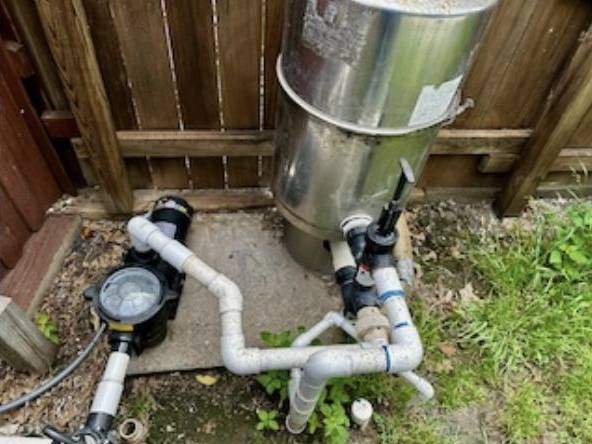
Pool inspection during a home purchase showing shell and equipment condition
What to check before you close. This is the part that protects you:
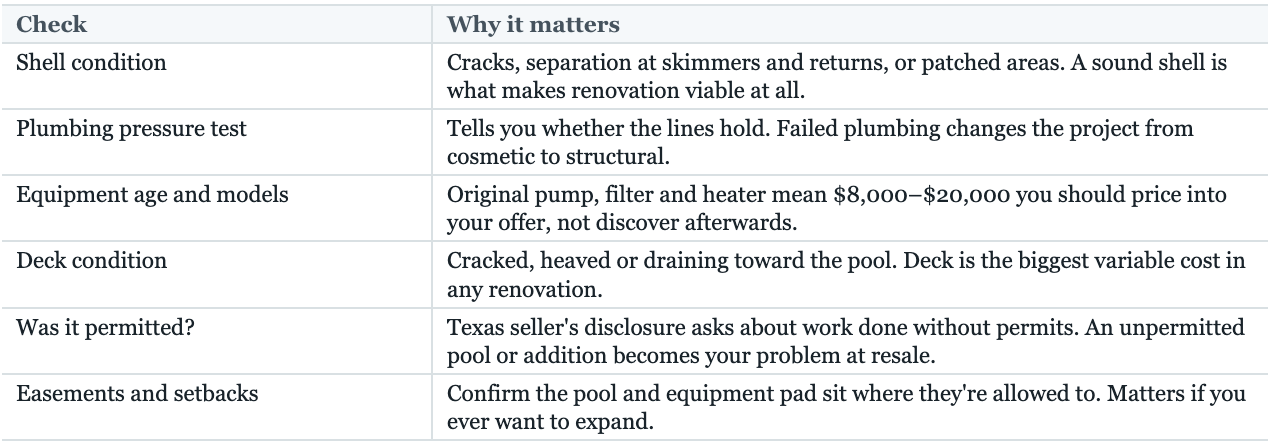
Sequence it right. Get the pool inspected during your option period, by someone who inspects pools rather than someone who spends fifteen minutes on it alongside the house. Use the findings to negotiate — a documented $28,000 renovation estimate is a credible ask at the closing table, and it's the single most useful piece of paper a pool buyer can hold.
Then renovate before you move in, if you can. An empty house is the easiest time to have a yard torn up, and it means the pool is ready the first summer rather than the second.
When renovation isn't the answer
We turn this work down when the pool doesn't deserve the money, and it's worth knowing the conditions.
The shell has failed. Significant cracking, movement from clay that wasn't engineered for, or separation at the fittings. You can resurface a failing shell and it will look beautiful for two years.
The pool is the wrong pool. Too small for the family, wrong end of the yard, depth you don't want. No finish fixes a layout problem.
Plumbing is at end of life. Repiping under an existing deck is possible but expensive and disruptive, and it often tips the maths.
You want to change the footprint. Moving walls or adding a spa in a new position is structural work, and structural work changes the cost class.
For those pools, a new gunite build runs roughly $95,000 to $150,000 in DFW at entry to mid-range, plus $15,000 to $25,000 to demolish and remove the old one. It's a real option, and occasionally it's the right one — but it should be a deliberate choice, not a default.
How to find out what you actually have
You can't tell from the surface. A tired pool and a failing pool look similar in photographs and completely different once the water is out.
What's needed is straightforward: drain and inspect the shell, pressure test the plumbing, assess the equipment, and check the deck and grade. That assessment is the difference between a quote you can trust and a number someone guessed at from the patio.
We do pool renovation across Plano, Dallas and the surrounding suburbs, Pool Renovation and we'd rather spend an hour telling you which category your pool is in than sell you a project it doesn't need. https://www.asppoolco.com/frisco/request-service/#~053f7710-3e64-47dd-95f1-5326679f642