


When a saltwater pool stops maintaining chlorine, many homeowners immediately assume they need a new salt cell.
Sometimes they do.
But in other cases, replacing only the cell may not be the best long-term decision.
If the controller is aging, replacement parts are expensive, the system is becoming obsolete, or the cost of repairing an older system is approaching the cost of a complete replacement, installing a new salt chlorination system may make more sense.
At America’s Swimming Pool Company of South Tampa, we help homeowners evaluate both options based on the actual condition of the equipment.
First, Make Sure the Salt Cell Is Actually the Problem
.jpg)
Before replacing anything, the system should be properly evaluated.
Low or zero chlorine can be caused by:
- A failed or worn salt cell
- Incorrect salt level
- Low water flow
- Flow switch problems
- Controller or power-supply failure
- Low stabilizer
- Algae or heavy chlorine demand
- Incorrect output settings
- Insufficient pump run time
Replacing an expensive salt cell without confirming the cause can result in unnecessary expense.
The first question should not always be, “Which cell should I buy?”
It should be:
“What is actually causing the system not to maintain chlorine?”
When Does It Make Sense to Replace Only the Salt Cell?
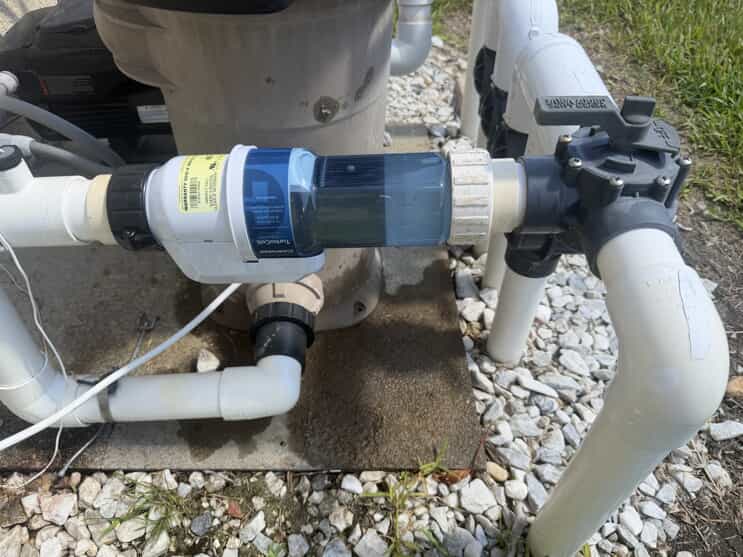
Replacing only the salt cell can make sense when the rest of the system is still in good condition.
A cell-only replacement may be the right choice when:
- The controller is working properly
- The existing system is still supported
- Replacement cells are readily available
- The cell is the confirmed point of failure
- The homeowner is satisfied with the existing system
- The overall system is not nearing the end of its useful life
In this situation, replacing the cell can restore chlorine production without replacing equipment that is still functioning properly.
When Should I Consider Replacing the Entire Salt System?
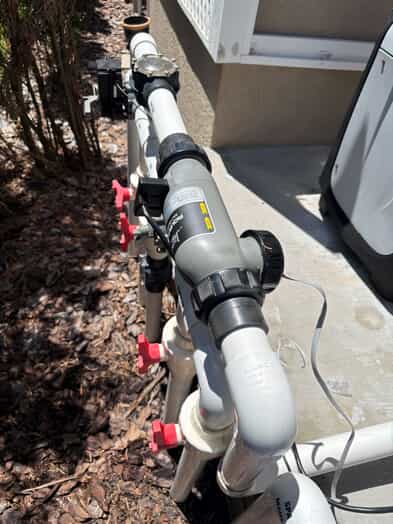
A complete system replacement may be the better investment when more than the cell is becoming a concern.
The Controller Is Also Aging or Failing
If the control board, power supply, display, or other controller components are also showing problems, replacing only the cell may leave you facing another significant repair shortly afterward.
The Existing System Is Obsolete or Difficult to Support
Older systems may have:
- Limited parts availability
- Expensive replacement components
- Outdated diagnostics
- Limited compatibility with newer equipment
At some point, continuing to invest in an aging platform may no longer make financial sense.
The Replacement Cell Is Very Expensive
Some replacement salt cells cost a significant percentage of the price of an entirely new salt chlorination system.
When the price difference between replacing only the cell and installing a complete new system becomes relatively small, it is worth comparing both options.
Why Are Replacement Salt Cells So Expensive?
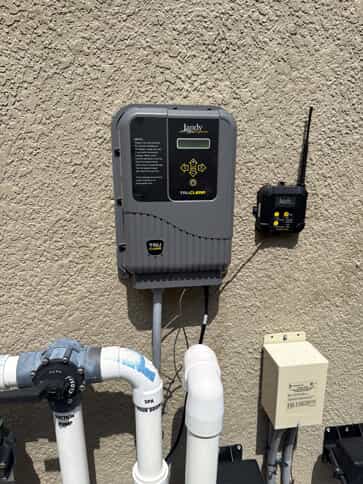
This is one of the most common questions homeowners ask when they see the price of a replacement cell.
A salt cell may look relatively simple from the outside, but the internal components are highly specialized.
Inside the cell are electrodes that must repeatedly produce chlorine through electrolysis while operating in a warm, wet, chemically aggressive saltwater environment.
Depending on the manufacturer and cell design, these electrodes may use a titanium base with specialized precious-metal oxide coatings that can include materials such as ruthenium and iridium.
Those materials are not unique to the swimming pool industry. They are used in a variety of industrial and technology applications.
Ruthenium, for example, is also used in data-storage technology. Recent growth in AI and cloud infrastructure has increased demand for high-capacity data storage, and industry market reports have identified data-center expansion as a driver of stronger ruthenium demand for hard-disk production. The broader ruthenium market is also currently expected to remain in significant deficit.
That does not mean data centers are the only reason salt cells are expensive. Replacement-cell pricing is influenced by several factors, including:
- Specialized electrode materials
- Manufacturing complexity
- Electronics and sensors
- Limited production volumes compared with mass-market consumer products
- Freight and supply-chain conditions
- Manufacturer pricing
- Warranty coverage
The result is that a replacement cell can sometimes cost a surprisingly large percentage of the price of a complete new salt system.
When that happens, it makes sense to compare the entire picture rather than automatically replacing the cell.
What Should I Compare Between a New Cell and a Complete New System?
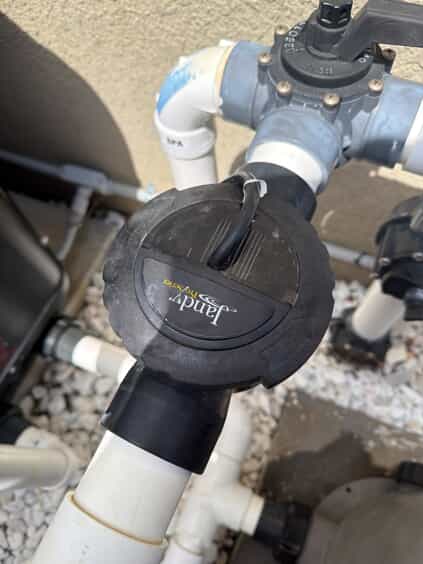
Consider:
- Cost of the replacement cell
- Age of the existing controller
- Condition of the controller and power supply
- Cost of a complete new system
- Warranty coverage
- Replacement-part availability
- Pool size
- Current system capacity
- Desired automation or Wi-Fi features
- Expected long-term serviceability
A cell-only replacement may still be the best choice.
But when the price difference is relatively small, a complete system replacement may provide a new cell, new controller, updated features, and a new warranty for a better long-term value.
The Existing System May Be Undersized
A salt system that is too small for the pool may need to operate at a high output percentage for long periods of time.
That can result in the cell accumulating operating hours more quickly.
When replacing an entire system, it may be worth evaluating whether the existing salt chlorinator was properly sized for:
- The volume of the pool
- Florida’s long swimming season
- Typical pump run time
- Actual chlorine demand
The largest possible system is not always necessary, but replacing an undersized system with a properly sized unit may provide better performance and reduce how hard the cell has to work.
You May Want Better Features
Newer salt systems may offer features such as:
- Improved diagnostics
- Better displays
- Easier output adjustment
- Wi-Fi connectivity
- Automation integration
- Better system monitoring
For some homeowners, replacing the entire system provides benefits beyond simply restoring chlorine production.
Is It Cheaper to Replace Only the Cell?
Usually, yes in the short term.
But the better question is whether the existing system is still worth investing in.
A lower initial repair cost may not provide the best long-term value if:
- The controller is also aging
- Additional repairs are likely
- Replacement parts are expensive
- The system is becoming obsolete
- The system no longer meets your needs
- A new system offers better warranty coverage or serviceability
The right decision depends on the condition and economics of the entire system, not just the price of one replacement part.
Can I Upgrade to a Different Brand of Salt System?
In many cases, yes.
Homeowners are not always required to stay with the same brand when replacing a complete salt system.
The best option may depend on:
- Existing automation
- Equipment compatibility
- Pool size
- Desired features
- Budget
- Warranty
- Long-term replacement cell cost
For example, a homeowner with an existing automation system may benefit from remaining within a compatible equipment platform.
A homeowner without automation may place more value on a salt system with its own built-in controls, diagnostics, or connectivity.
Salt Cell Replacement and Salt System Upgrades in South Tampa
America’s Swimming Pool Company of South Tampa diagnoses, repairs, and replaces salt chlorination systems throughout South Tampa and surrounding communities.
If your salt system is no longer producing properly, call (813) 588-8122 to schedule an evaluation.
We can help determine whether replacing the cell makes sense or whether a complete salt system replacement provides better long-term value.