


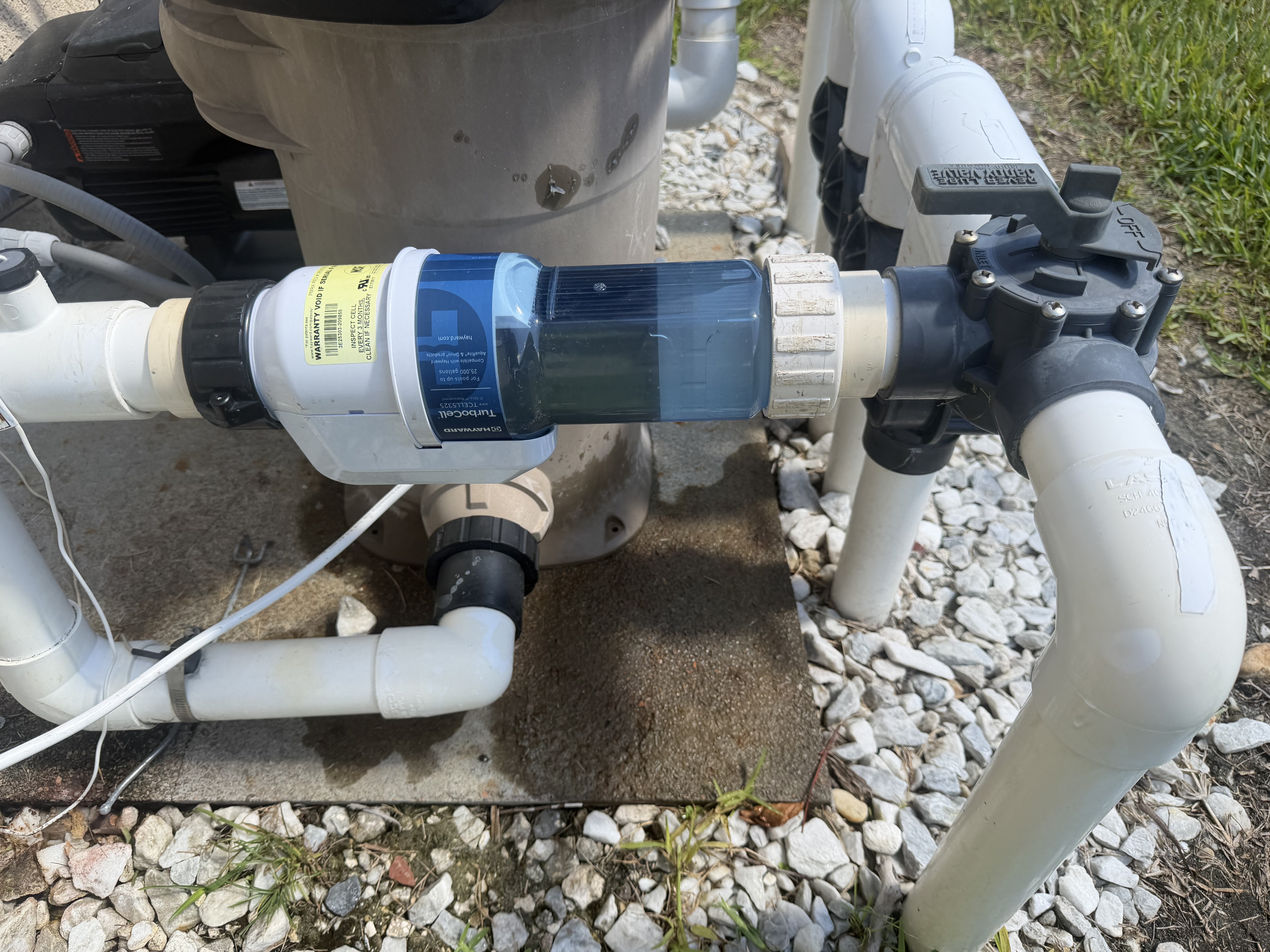
A saltwater pool can look perfectly normal while the salt chlorination system is no longer producing enough chlorine.
The controller may still have power. The pump may be running. The salt level may appear normal. But if the pool consistently has little or no free chlorine, the salt system may not be operating correctly.
At America’s Swimming Pool Company of South Shore, we regularly diagnose salt systems that appear to be “on” but are not actually producing enough chlorine to maintain the pool.
So how can you tell whether your salt cell is really working?
A Salt Pool Is Still a Chlorine Pool
One of the most common misunderstandings about saltwater pools is that they do not use chlorine.
They do.
A salt chlorination system uses dissolved salt in the pool water to generate chlorine. Instead of relying entirely on manually added chlorine, the salt cell produces chlorine as properly salted pool water passes through the system.
If the salt system stops producing properly, the pool can develop the same problems as any other pool with insufficient sanitizer, including:
- Low or zero free chlorine
- Cloudy water
- Algae growth
- Increased chlorine demand
- Difficulty maintaining water quality
That is why it is important to look at more than whether the controller simply has power.
-resized-to-medium.jpeg)
What Are the Signs That a Salt Cell May Not Be Working?
Several signs can indicate that the system is not producing enough chlorine.
Low or Zero Free Chlorine
This is one of the biggest warning signs.
If the salt system appears to be operating but repeated water testing shows little or no free chlorine, the system may not be generating properly.
Low chlorine does not automatically mean the salt cell has failed. Other factors can also contribute, including:
- Low stabilizer
- Heavy swimmer use
- Algae or other organic contamination
- Incorrect output settings
- Insufficient pump run time
- Incorrect salt level
- Low water temperature
- Poor water flow
But consistently low or zero chlorine should not be ignored.
Warning or Check Cell Lights
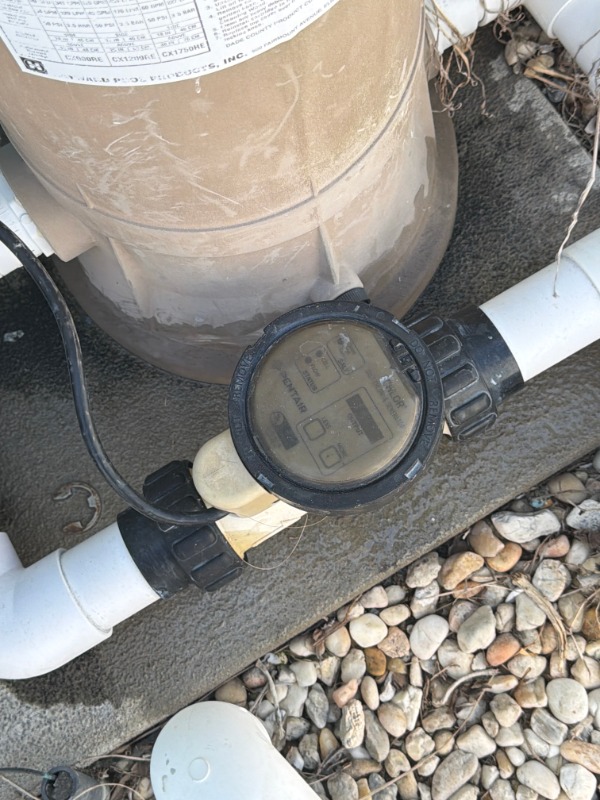
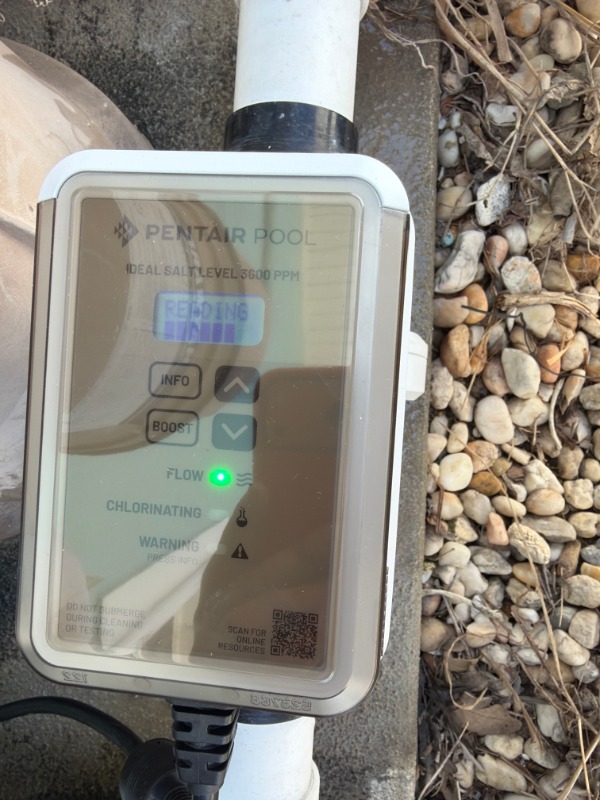
Many salt systems display warning lights, error messages, or service indicators when something is wrong.
Depending on the manufacturer and model, these may include:
- Low salt
- High salt
- No flow
- Check cell
- Inspect cell
- Service required
The exact meaning of each indication depends on the system.
No Generating Indicator
Most salt chlorination systems have some indication that the unit is actively generating chlorine.
If the system is powered on but is not showing a generating or production indication when it should be, further evaluation may be needed.
Heavy Calcium Buildup on the Cell
Calcium scale can form on the metal plates inside a salt cell.
Heavy buildup may interfere with proper operation and can contribute to reduced performance.
The cell should be inspected and cleaned based on its actual condition and the manufacturer’s recommendations.
The Cell Is Reaching the End of Its Service Life
Salt cells do not last forever.
The useful life of a salt cell can vary based on:
- Cell size
- Pool size
- Output percentage
- Pump run time
- Water chemistry
- Calcium buildup
- Operating conditions
A heavily used or undersized cell may wear out faster than a properly sized system operating at a lower output.
Does a Normal-Looking Controller Mean the Salt Cell Is Working?
Not necessarily.
A controller can have power and display normal information while the cell is producing little or no chlorine.
The best way to evaluate a salt system is to look at the entire picture:
- Is there adequate water flow?
- Is the salt level actually correct?
- Is the cell clean?
- Is the controller showing warnings?
- Is the system indicating chlorine production?
- Is the output percentage appropriate?
- Is the pump running long enough?
- Is the pool actually maintaining free chlorine?
A salt system should be judged by whether it is operating correctly and maintaining the pool, not simply by whether the display is illuminated.
Why Does My Salt Pool Have Zero Chlorine?
There are several possible reasons.
The cell may not be generating, but other conditions can also consume chlorine as quickly as it is being produced.
Possible causes include:
- Failed or worn salt cell
- Incorrect salt level
- Low stabilizer
- Algae growth
- Heavy organic load
- Low output setting
- Insufficient circulation time
- Flow switch problem
- Controller or power-supply issue
- Cold water conditions
That is why replacing the cell without diagnosing the system first can be an expensive mistake.
Should I Clean the Salt Cell?
A scaled salt cell may need cleaning, but cleaning should only be performed when necessary and in accordance with the manufacturer’s recommendations.
Unnecessary or overly aggressive acid cleaning can shorten the life of some cells.
The better approach is to inspect the cell and clean it when actual scale buildup is present.
When Should I Call a Pool Professional?
Professional diagnosis may be appropriate when:
- Free chlorine remains consistently low or zero
- The controller shows warning or service lights
- The system is not showing chlorine production
- Salt readings appear inaccurate
- The cell repeatedly develops scale
- The cell is several years old
- You are unsure whether the problem is the cell, controller, or water chemistry
A proper diagnosis can help determine whether the system needs:
- Adjustment
- Cleaning
- Repair
- Salt cell replacement
- Complete salt system replacement
Salt System Repair and Diagnosis in South Shore, Florida
America’s Swimming Pool Company of South Shore services salt chlorination systems throughout Apollo Beach, Riverview, Ruskin, Sun City Center, Gibsonton, Wimauma, and surrounding South Shore communities.
If your salt pool is not maintaining chlorine or you are not sure whether your salt cell is actually working, call 813-322-5270 to schedule an evaluation or service visit.
We can help determine whether the issue is the cell, controller, water chemistry, circulation, or another part of the system.