


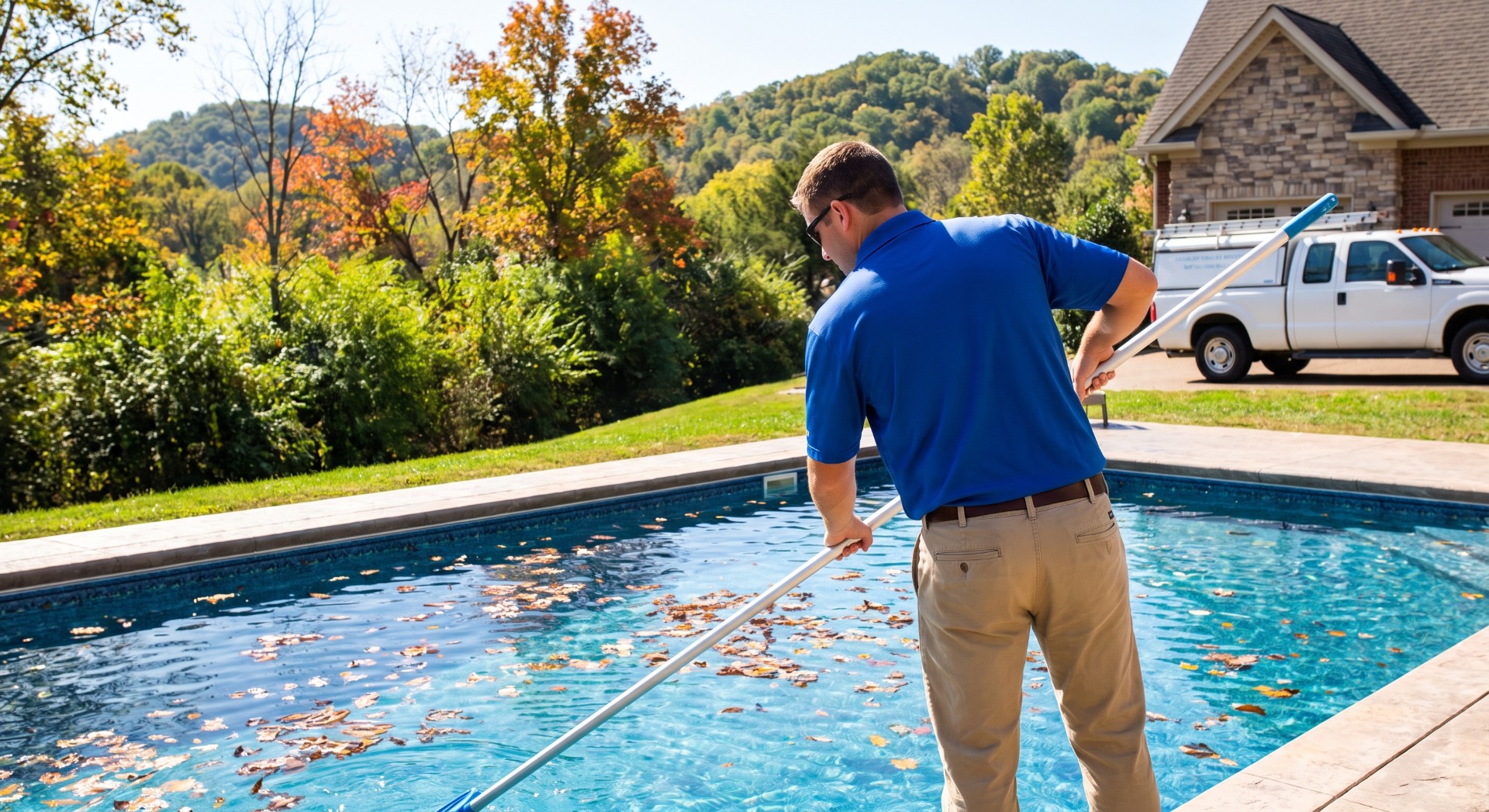
When the leaves start turning in Murfreesboro, Franklin, and Smyrna, pool owners across Middle Tennessee face the same big question: how do I get my pool ready for winter?
A proper pool closing protects your pool and equipment from freeze damage, keeps leaves and debris out, and makes opening your pool in the spring much easier. Whether you plan to close your pool yourself or have a professional handle it, this guide walks homeowners across Rutherford and Williamson counties through what they need to know.
When Should You Close Your Pool in Middle Tennessee?
There’s no single “right” date. The best guide is your water temperature, not the calendar.
Many pool professionals recommend closing once your water stays below about 65°F. At that temperature, algae grows much more slowly, so your winter chemicals last longer. In Middle Tennessee, that usually happens sometime in October or November, depending on the year.
Closing too early, while the water is still warm, can give algae a chance to grow under the cover. Waiting until the water cools helps your pool open cleaner in the spring.
Why a Proper Pool Closing Matters
- Freeze damage is expensive. Middle Tennessee winters are often mild, but hard freezes do happen. When water freezes inside pipes, pumps, filters, or heaters, it expands and can crack them. Repairing freeze damage can cost far more than a proper closing.
- Leaves cause stains and clogs. Our region’s heavy tree cover means lots of falling leaves. Leaves that sit in a pool can stain the surface and clog your equipment.
- Spring opening gets easier. A pool that’s closed correctly usually opens clean and clear. A pool that isn’t can turn green by spring and need a major cleanup.
Your Step-by-Step Pool Closing Checklist
1. Clean the Pool Thoroughly
Skim, brush, and vacuum the pool. Empty the skimmer and pump baskets. Starting with a clean pool helps prevent algae and staining over the winter.
2. Balance the Water Chemistry
Test and adjust your pH, alkalinity, and calcium hardness a few days before closing. Balanced water helps protect your pool’s surface and equipment all winter long.
3. Shock the Pool
Add a shock treatment to kill bacteria and algae. Let the chlorine level come back down before adding winter chemicals, since high chlorine can weaken some of them.
4. Remove Accessories
Take out ladders, handrails, skimmer baskets, automatic pool cleaners, and toys. Clean them and store them somewhere dry.
5. Lower the Water Level (If Needed)
Depending on your pool type and cover, you may need to lower the water below the skimmer and return lines. This helps keep freezing water from damaging them.
6. Blow Out and Plug the Lines
Use an air blower to clear water out of the plumbing lines, then plug them. Pool antifreeze may also be added to the lines for extra protection. This is one of the most important steps for preventing freeze damage.
7. Drain and Protect Your Equipment
Drain water from the pump, filter, heater, and chlorinator. Water left inside pool equipment can freeze and crack it.
8. Add Winterizing Chemicals
A winter algaecide and other winterizing products help keep the water clean while the pool is covered.
9. Install Your Pool Cover
A secure, well-fitted pool cover keeps out leaves, debris, and sunlight all winter.
10. Check Your Pool During the Winter
Clear leaves and standing water off the top of your cover, and make sure it stays secure after storms.
Choosing a Pool Cover
- Safety covers are anchored to the deck and designed to support weight. Many families choose them for peace of mind around children and pets.
- Mesh covers let rainwater drain through while blocking leaves and debris.
- Solid covers block sunlight and debris but need standing water pumped off the top.
The right cover depends on your pool, your budget, and your family’s needs.
Closing Your Pool vs. Keeping It Open
Some Middle Tennessee homeowners choose to keep their pools open through the winter with reduced service instead of closing them. This can work, but it requires freeze protection, meaning the pump must run during freezing temperatures to keep water moving. Many modern pool systems have automatic freeze protection built in.
If you’re not sure which option is right for your pool, our team is happy to talk through both.
Frequently Asked Questions
Q: When should I close my pool in Murfreesboro?
Most homeowners close their pools once water temperatures stay below about 65°F, which usually happens in October or November.
Q: Can I close my own pool?
Yes, but steps like blowing out the lines and protecting your equipment are easy to get wrong. A mistake can lead to costly freeze damage, which is why many homeowners choose a professional pool closing.
Q: What happens if I don’t winterize my pool?
Water left in pipes and equipment can freeze and crack them. Leaves and algae can also turn your pool green by spring.
Q: Do I need a safety cover?
Safety covers aren’t required for every pool, but many families choose them for added protection around kids and pets.
Areas We Serve
ASP – America’s Swimming Pool Company of Murfreesboro serves homeowners across Rutherford County, Williamson County, and greater Middle Tennessee, including:
- Murfreesboro
- Smyrna
- La Vergne
- Franklin
- Leiper’s Fork
- Arrington
- Nolensville
About ASP of Murfreesboro
ASP – America’s Swimming Pool Company of Murfreesboro has proudly served Middle Tennessee pool owners for more than two years. Rated 4.8 stars on Google by our Middle Tennessee customers, we’re proud to care for pools across Rutherford and Williamson counties. We’re licensed and insured in Tennessee, and our team provides weekly pool maintenance, pool closings, pool repairs, and more.
Contact Us
ASP – America’s Swimming Pool Company of Murfreesboro
Serving Murfreesboro and surrounding counties
Phone: (629) 335-3829
Website: https://www.asppoolco.com/murfreesboro/